
Introduction
Breslau and Wrocław – a city of multiple identities and two biographies, divided by the Nazi era and World War II, the consequences of which particularly affected the pre-war community of German Jews in Breslau. After the war, some of those who managed to escape the Holocaust kept the memory of life in the city alive after their emigration. This exhibition introduces several such families through objects from Breslau preserved in their collections. It is significant that they are on display in this historic tenement house on Salt Square, which, through history, was home for multiple Jewish families of Breslau. The symbolic act of “putting things back,” that is, returning them to Wrocław, even if only for the duration of the exhibition, is an attempt to bring together the German, Jewish and Polish identities of the city. The intention is to reconnect locally with the interrupted, displaced, and continuously reconstructed memories of Breslau Jewish families. The objects shown in the exhibition are carriers of stories embedded in the history and topography of Wrocław. The power and value of the displayed objects lie in the deeply personal everyday stories they tell. Their fates serve as testimonies to the way objects flowed during and after the war – those saved, those lost and also those that were recovered.
-
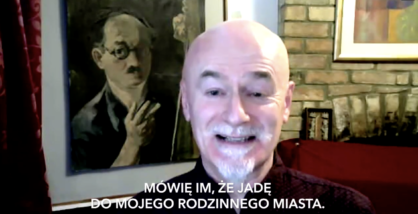
Descendants
multimediaMore about objectTestimonies of contemporary members of the families presented at the exhibition about their relations with Breslau/Wrocław.
-

Mezuzah from the Oppenheim House, parchment, 19th-20th c.
objectMore about objectA mezuzah is a scroll of parchment inscribed with passages from the Torah (Book of Deuteronomy), slipped into a case and affixed to the doorposts of a Jewish home. During the renovation of the building we are currently in, the Oppenheim House, from 2013 to 2017, two mezuzot were found: one in a damaged case […]
-

Piece of paper with text, 19th c.
documentMore about objectThe Oppenheim House holds untold stories that we are unable to fully reconstruct. Among the objects found here during the 2013–2017 renovation was this piece of paper, presumably ripped from a notebook. Researchers and paper conservators estimate that it dates back to the 19th c. It contains repeated Hebrew letters and a few words in […]